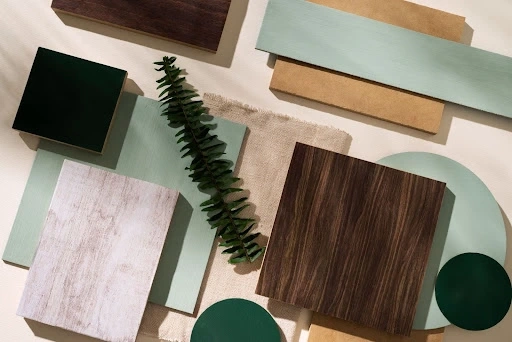
MDF and chipboard, often preferred in furniture and interior decoration projects, are two wood-based materials with similar yet different characteristics. In this article, we will provide detailed information about MDF and chipboard, compare their advantages and disadvantages, and explain the areas in which they are used.
MDF and chipboard, often preferred in furniture and interior decoration projects, are two wood-based materials with similar yet different characteristics. In this article, we will provide detailed information about MDF and chipboard, comparing their advantages and disadvantages, and explaining the areas in which they are used.
Differences Between MDF and Chipboard
The main differences between MDF and chipboard arise from their material structures. MDF has a denser and more homogeneous structure, while chipboard is looser and based on wood shavings. These differences directly affect the performance and application areas of both materials.
What is MDF?
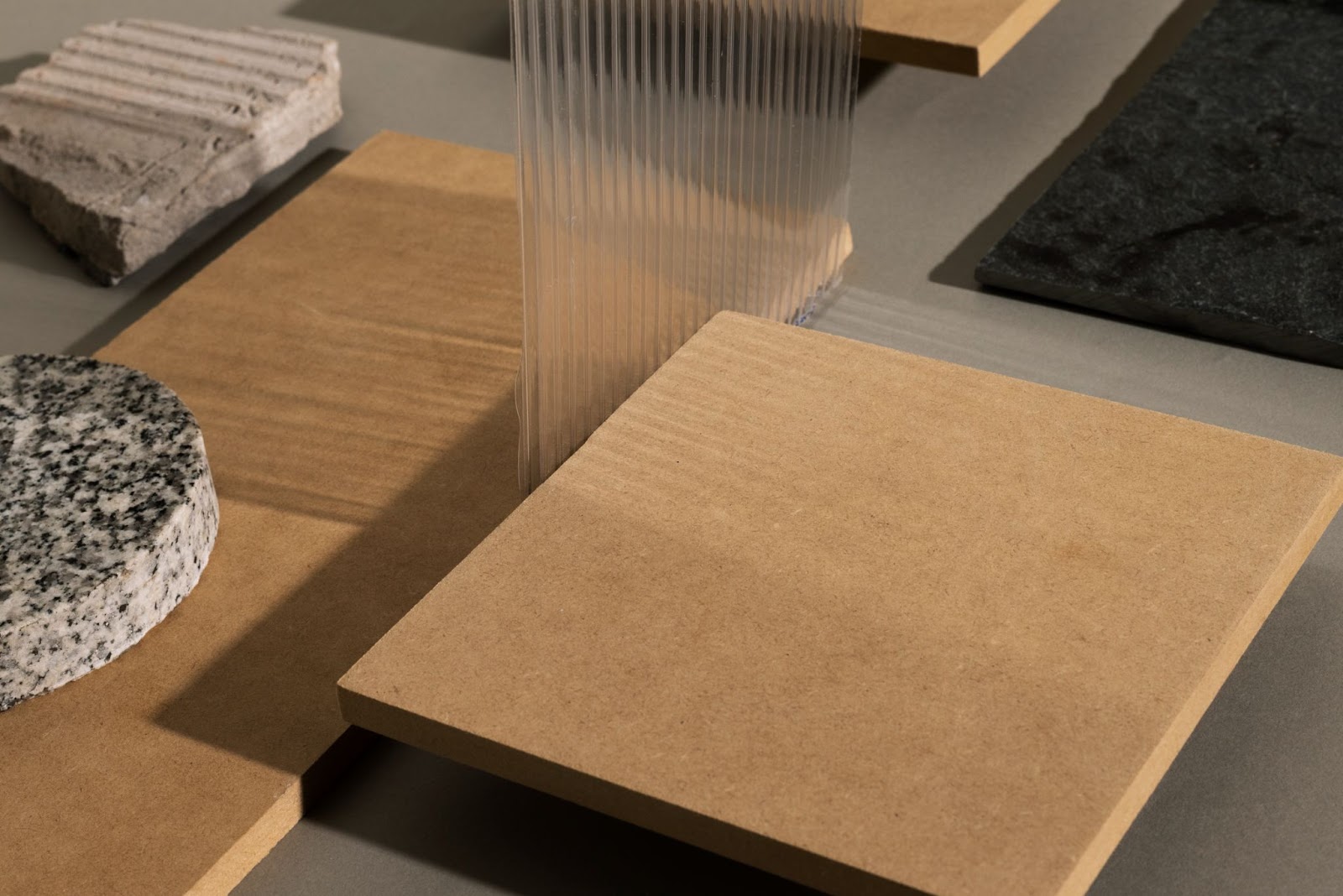
MDF (Medium Density Fiberboard) is a medium density fiber board. It is produced by mixing fibers obtained from hard or soft woods with a special adhesive and other chemical additives, then pressing them under high temperature and pressure.
As a wood-based material, MDF is widely used in the furniture and decoration sector due to its healthy structure and durability. MDF products, found in homes, offices, restaurants, and many other areas, offer decorative solutions with different surface textures and color options. So, how is MDF produced? You can see the detailed explanation below.
How is MDF Manufactured?
The foundation of MDF production is wood fibers. These fibers are obtained by mixing certain proportions of soft and hard wood. The wood pieces are broken down into fibers using steam and special cutters. These fibers are then mixed with special resins and hardeners to create a durable structure.
The prepared mixture is dried with hot air until a certain moisture content is achieved. The fibers are then evenly spread out and the initial board form is created with the first pressing process. In the second press stage, the fibers are tightly bonded to each other under high temperature and pressure.
Finally, the formed boards are left to cool. The cooled boards are sanded to achieve the desired thickness and smoothness. After these processes are completed, the MDF boards are cut into sizes suitable for their intended use and made ready for use.
Advantages and Disadvantages of MDF
Below are the explanations of MDF's advantages and disadvantages.
Advantages of MDF
MDF is noted for its extremely smooth and homogeneous surface structure. Its production from fine wood fibers prevents any roughness or ripple on the surface. This feature provides a significant advantage, especially in surface coating and painting processes. Applications such as lacquer paint, PVC coating, or natural wood veneer allow for aesthetically high-quality results.
Due to its fibrous and dense structure, it is highly suitable for milling and shaping processes. This offers great flexibility, especially in decorative furniture designs. Desired patterns and forms can be easily applied on door surfaces, carved panels, or custom-designed shelves.
Thanks to its non-porous structure, MDF absorbs paint and coating materials evenly across the surface. This minimizes color fluctuations and surface irregularities after application, providing a professional appearance. Quality results are particularly obtained in top coat painting processes.
In terms of screwing and bonding, MDF offers a highly durable performance. Its homogeneous structure ensures high holding capacity in screw applications; screws do not loosen over time and fastening points remain strong. Similarly, adhesives adhere strongly to the MDF surface, allowing for long-lasting use.
Disadvantages of MDF
Due to its dense fiber structure, MDF is a heavier material compared to other wood-derived materials. This can create challenges in moving, assembling, or relocating large pieces of furniture. Especially in modular or portable furniture, this weight may require extra precautions and attention.
Although it is a hard and compact material, MDF has low flexibility. Therefore, it may be vulnerable to sudden impacts. Impacts occurring on corners and edges may lead to deformations such as cracking, breaking, or denting. For this reason, caution or additional protective measures are recommended in areas with impact risk.
Is MDF Water Resistant?
Standard MDF is not water-resistant. However, water-resistant versions referred to as "green MDF" are produced with special adhesives and additives. This type of MDF is suitable for use in humid environments.
Where is MDF Used?
MDF is used in the following areas:
- Kitchen and bathroom cabinets
- Door surfaces
- Panel wall claddings
- Furniture designs
- Shelves and decorative elements
What is Chipboard?
Chipboard is formed by combining wood shavings with adhesive under heat and pressure. This less dense material is more economical compared to MDF in terms of cost.
Technically known as particle board, it is a man-made wood derivative using wood shavings as the primary component. The term "chipboard" is derived from combining "artificial" and "board," and is more commonly used colloquially compared to particle board. The term “LDF (Lower Density Fiberboard)” can also be used for chipboard. It is widely preferred as a more economical alternative to natural wood lumber in the furniture industry.
While chipboard is structurally a hard material, it is very susceptible to water and humidity. When exposed to moisture or water, issues like swelling, softening, and deformation can occur. Therefore, its use in areas that may be exposed to water is limited. You can learn more about how chipboard is produced below.
How is Chipboard Manufactured?
The chipboard production process begins with the selection of certain types of trees with specific characteristics. The selected trees are broken down into small pieces using special machines. These pieces are classified by size and different classes of shavings are used for different purposes throughout the production process. Shavings that will be placed in the top and bottom layers are dried to specified moisture levels. Special adhesives and chemicals are added to the dried shavings. Different formulations are applied for each layer. These mixtures are then dried with hot air to prepare them for processing.
During production, the finest shavings are laid in the bottom layer, while larger pieces are placed in the middle layer. If necessary, fine shavings are added on top to enhance surface quality. This multi-layer structure is first shaped with light pressing. Then, it is pressed a second time under high temperature and pressure to ensure all pieces are tightly bonded. After this, the boards are allowed to cool.
The cooled boards are sanded for smoothness and to reach the desired thickness. In the final stage, they are cut into sizes as needed and made ready for use. Chipboard is especially highlighted for its low cost and easy workability, making it frequently preferred in many areas from household items to office furniture.
Advantages and Disadvantages of Chipboard
Below are the areas where chipboard is advantageous and disadvantageous.
Advantages of Chipboard
Chipboard is a very cost-effective material. As wood shavings are used in its production process, raw material costs are low, which is reflected in the prices of the final product. Therefore, it is particularly preferred in low-budget projects and mass-produced furniture.
Its lightweight nature makes it very easy to transport and assemble. Compared to materials with dense structures like MDF, its lesser weight is a major advantage, especially in products that are frequently moved or used modularly. Its portability provides time and effort savings both during production and in use.
Its smooth surface and suitability for coating make it easy to apply coverings like melamine, PVC, or laminate on chipboard. This allows for the desired aesthetic appearance and the development of different decorative solutions. Its smooth structure also facilitates ease of processing during use.
Disadvantages of Chipboard
Due to its structure, chipboard is very sensitive to moisture and water. When in contact with moisture, swelling, blistering, or disintegration can occur. For this reason, its usage in humid environments like bathrooms, kitchens, or outdoor areas is not recommended.
The material is not durable against impacts due to its fibrous and loose nature. Strong impacts on its surface can easily cause it to chip or crack. This shortens the lifespan of the product and requires careful handling during use.
Problems with loosening can occur in screwing processes over time. The screw may not provide adequate grip within the chipboard structure, which can weaken connection points and lead to flexing of furniture parts. This can be a disadvantage in applications that require long-term firmness.
Where is Chipboard Used?
Chipboard is used in the following areas:
- Low-cost furniture production
- Temporary structures
- Office and home cabinet systems
- Shelf systems